


🧠 Forgetting Is Not the Same as Losing
Howard Freeman made a careful distinction between losing one’s nature and forgetting it.
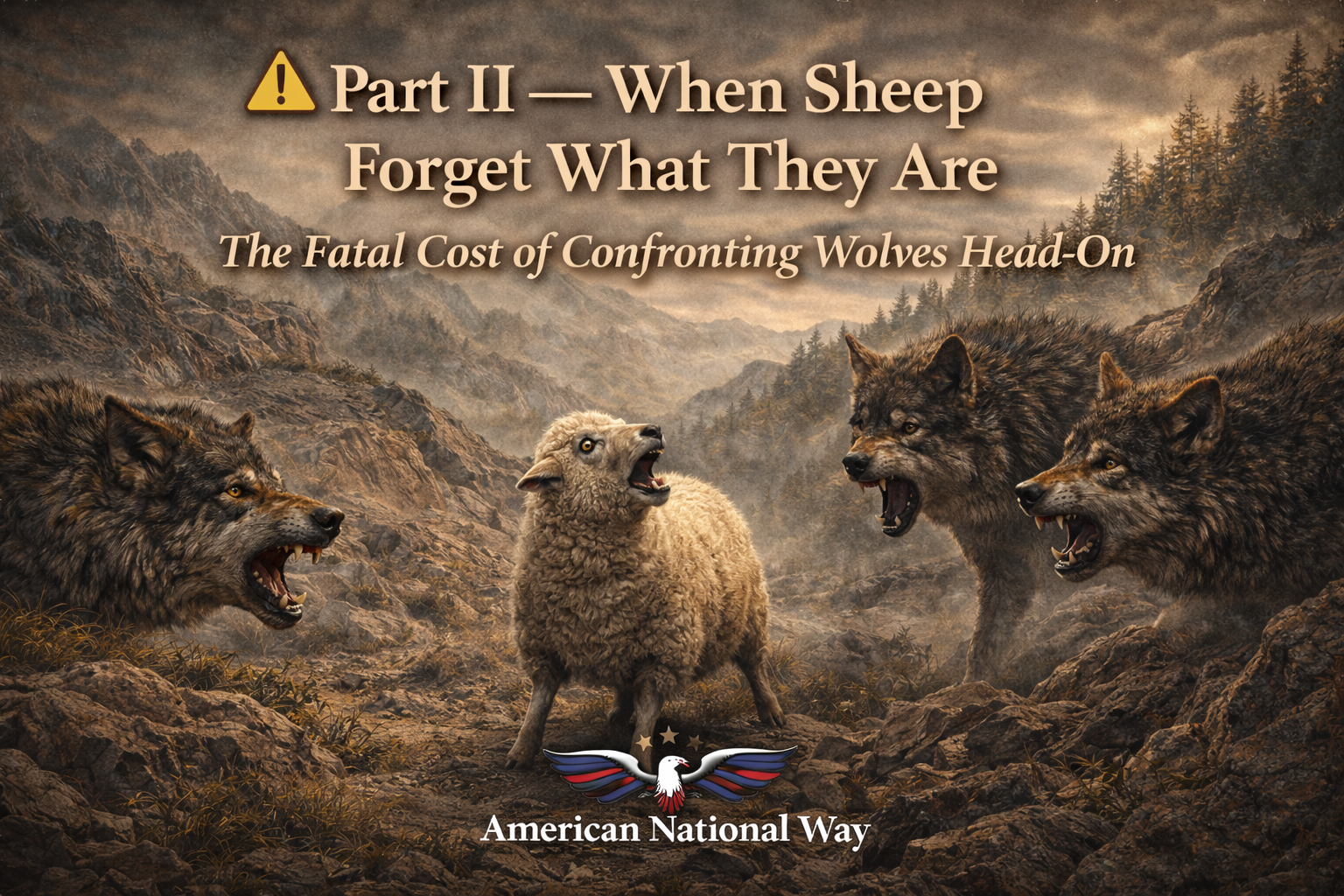
Sheep do not become wolves by accident. More often, they forget what they are — how they are meant to live, how they are meant to stand, and how they are meant to conduct themselves.
Forgetting does not happen overnight. It happens gradually, through repetition, pressure, convenience, and fear.
A sheep that forgets what it is begins to imitate the environment instead of understanding it.
⚙️ Conditioning Replaces Awareness
Freeman often warned that modern systems do not rely on force. They rely on conditioning.
From an early age, men and women are trained to:
- Obey before understanding
- Speak before thinking
- React emotionally to authority
- Confuse permission with rights
Over time, this conditioning replaces awareness. Conduct becomes automatic. Words are spoken without intent. Agreements are entered without comprehension.
The danger is not obedience itself — it is unconscious obedience.
🧾 Identity Is Slowly Exchanged
When a sheep forgets what it is, it begins to accept labels, roles, and identities assigned by systems.
Freeman emphasized that systems prefer roles over souls:
- Registrant
- Account holder
- Defendant
- Employee
- Subject
These roles are not inherently evil, but they are contextual. They operate within specific jurisdictions and carry specific obligations.
When a man or woman confuses a role for their true identity, they surrender ground without realizing it.
⚖️ Lawful Conduct Becomes Legal Performance
One of the clearest signs of forgetting is when lawful conduct is replaced by legal performance.
Instead of asking:
Is this right?
The question becomes:
Is this allowed?
Freeman warned that legality is procedural, while lawfulness is moral and relational. Systems reward compliance, not conscience.
A sheep that forgets this distinction begins to measure life by permissions rather than principles.
🧠 Emotion Is Used as Leverage
Freeman observed that fear, pride, anger, and urgency are powerful tools for control.
When emotions are triggered:
- Speech becomes careless
- Decisions become rushed
- Consent is easily obtained
Systems provoke reaction because reaction bypasses reflection.
The disciplined sheep learns to pause. Silence becomes a shield. Calm becomes leverage.
🕊️ Remembering Is an Act of Discipline
Remembering what one is does not require rebellion.
It requires discipline:
- Watching words
- Honoring boundaries
- Acting deliberately
- Refusing to perform unnecessarily
Freeman taught that dignity is preserved not by loud declarations, but by quiet consistency.
Remembering is not nostalgia. It is self-governance.
🔍 The Cost of Forgetting
When sheep forget what they are:
- Wolves do not need to hunt
- Systems do not need to coerce
- Authority does not need to explain itself
Everything operates on assumption.
Freeman did not condemn the sheep. He warned them.
Forgetting one’s nature makes even a peaceful soul vulnerable.
🧱 Preparing for What Comes Next
This part explains how forgetting happens — not to assign blame, but to restore clarity.
The next parts will examine how remembrance translates into:
- Standing
- Jurisdictional awareness
- Disciplined consent
- Lawful posture
Before a sheep can navigate wolf country wisely, it must first remember what it is.
Awareness is the beginning of protection.